Logo

Our Faculty

Our Journal

History of Istanbul University

Historical Overview of Istanbul University

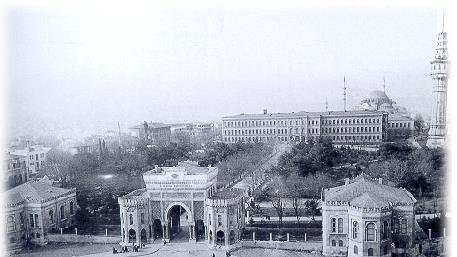
There are different academic perspectives regarding the historical origins of Istanbul University, which sits at the intersection of Byzantine and Ottoman scholarly traditions. German legal historian Richard Honig traces the history of the university back to March 1, 1321, stating that an institution of higher education comparable to Roman universities—comprising faculties of medicine, law, philosophy, and literature—existed on the hill where today’s main building is located. This view represents a scholarly perspective that situates the beginning of university education in Istanbul within the Medieval period.

Turkish researchers, on the other hand, place the origins of Istanbul University in 1453, immediately following the conquest of Istanbul. The scholarly meetings held in Hagia Sophia and Zeyrek on May 30, 1453 are regarded as the institutional starting point of Turkish-Ottoman scientific life, forming the foundation for the construction of a külliye in the following period. Sıddık Sami Onar emphasizes that, because the Turks did not find an existing university in Istanbul, they developed a higher education institution aligned with their own civilizational values. Similarly, Cemil Bilsel states that the foundation of an academic structure in medicine, law, science, and literature began with the establishment of the Fatih Külliye in 1470. Soviet medical scholar Danishefsky’s assertion that one of the world’s oldest medical faculties existed in Istanbul provides international support for this historical framework.

During the Republican period, Istanbul University underwent structural reforms under the New Universities Law No. 1750, dated June 20, 1973, coinciding with the 50th anniversary of the Republic. With the complete replacement of Law No. 4936, the Higher Education Council was established, and major universities were tasked with meeting inter-university academic staffing needs. Istanbul University fulfilled this responsibility to a significant extent, contributing greatly to strengthening academic cadres across Türkiye.

Today, Istanbul University operates within the framework of the Higher Education Law No. 2547 dated November 6, 1981, continuing its historical, social, and scientific mission based on a contemporary, progressive, and secular understanding of education. The institution’s emblem featuring intertwined serpents was inspired by motifs from the Seljuk Healing Center dated 1243 and designed by Prof. Süheyl Ünver, symbolizing the university’s deep historical roots.

One of the most significant milestones in the history of the Republic, the 1933 University Reform, transformed Istanbul University into Türkiye’s first modern university in line with Atatürk’s vision. Various educational systems had been implemented within the Ottoman Empire until the early 19th century; however, Atatürk asserted that the madrasa system no longer met the needs of modern society. Through the Law on the Unification of Education, all religious education institutions were closed, consolidating the national education system under the Ministry of National Education. The 1933 reform provided universities with a modern scientific structure.

The foundation of the Istanbul University Faculty of Business Administration, however, lies in the Institute of Business Economics, established in 1954 within Istanbul University by Harvard Business School, which still continues its graduate education activities today. This institute pioneered modern business education in Türkiye and introduced an internationally oriented academic perspective.

As Türkiye’s first Faculty of Business Administration, the Faculty began its academic activities on April 11, 1968 in Beyazıt; moved to Rumelihisarüstü in 1983; then to its building on the Avcılar Campus in 1989; and finally to its current building in Avcılar in 2016, where it continues its operations.


VISION

To become a distinguished and preferred business school that is innovative, research-oriented, and internationally recognized in business education; known for its exceptional impact on the global business world, academic excellence, strategic partnerships, and contributions to society.

MISSION

To offer high-quality academic programs with an interdisciplinary perspective aimed at discovering and developing the managerial, leadership, and entrepreneurial potential of students from diverse cultural, social, and academic backgrounds.

To conduct scientifically grounded, innovative, and practice-oriented business research by understanding the dynamic and evolving needs of the business world; and to contribute to the advancement of science by sharing this research with national and international academic communities.

To establish strategic partnerships with business organizations, professional institutions, and strong alumni networks in order to strengthen university–industry collaboration; and to create a sustainable bridge between academia and the business world through knowledge transfer, mentorship, internships, and joint projects.

To support the practical applications of scientific knowledge with an approach centered on social benefit and sustainable development; and to educate our students as future leaders through an educational philosophy that prioritizes social interaction, ethical values, lifelong learning, and individual development.

THE BOARD MEMBERS

CONTACT & INFO

Prof. Dr. Hamparsum Bozdoğan

·  McKenzie Professor in Business,

·  Sarah & Tommy Bronson Faculty Research Fellow

https://faculty.utk.edu/Hamparsum.Bozdogan

https://haslam.utk.edu/experts/hamparsum-bozdogan

Prof. Dr. C. Warren Neel

·  Dir. Corporate Governance Center

·  Member of Society International Business Fellows

https://haslam.utk.edu/experts/c-warren-neel

Prof. Dr. Peter L. Slavin

·  President of Massachusetts General Hospital

·  Professor of Health Care Policy of Harvard Medical School

https://hcp.hms.harvard.edu/people/peter-slavin


ISTANBUL BUSINESS RESEARCH (f.k.a. the Istanbul University Journal of the School of Business) is the official peer-reviewed academic journal of Istanbul University School of Business. It is published twice a year since 1972. It is published twice a year since 1972. As an international business journal, IBR is dedicated to the publication of high quality papers that deliver novel, theoretical and research-based studies. IBR is indexed and abstracted in the ESCI (the Emerging Sources Citation Index), Clarivate Analytics Web of Science, and adopts open access policy.


Please visit http://mc04.manuscriptcentral.com/IBR for manuscript submissions.
Please visit ibr.istanbul.edu.tr to see the IBR homepage provided by Istanbul University Press. (Former homepage is located at: http://dergipark.gov.tr/iuisletme.) 


Dear Students,

Welcome to Turkey’s first and pioneering Faculty of Business Administration.

The Istanbul University Faculty of Business Administration, which inherited the deep scientific legacy of the Institute of Business Economics—founded in 1954 to launch graduate-level business education in our country—was officially established in 1968 and has since become one of the most esteemed institutions in our academic community. The scientific approach and pedagogical structure shaped under the leadership of Harvard Business School have formed the foundation of our Faculty’s academic culture, just as they did during the Institute’s establishment. The knowledge and experience brought to Türkiye by Turkish academics educated at Harvard Business School created a unique management education model centered on case analysis and discussion-based learning. This model has played a decisive role in training numerous top-level executives in both the public and private sectors.

This historical and scientific heritage continues to be the strongest pillar of our Faculty’s solid connections with the business world. The fact that our graduates rise to leadership positions on national and international platforms is a natural outcome of an educational approach that blends theory with practice in the discipline of business administration. When you graduate from our Faculty, we have full confidence that you will carry this deep-rooted tradition forward and proudly represent our institution.

Our Faculty of Business Administration has earned AACSB accreditation—held by only five percent of business schools worldwide—becoming the first Faculty of Business Administration within a Turkish public university to receive this distinction. This significant achievement demonstrates that our research capacity, academic publications, the scientific performance of our faculty members, and our collaborative projects with industry fully meet international standards. With this globally recognized assurance of quality, our Faculty holds an esteemed position in the international academic arena.

Today’s world of business is undergoing a profound transformation driven by artificial intelligence, digital transformation, big data analytics, and Industry 4.0 applications. Modern management is no longer based solely on theoretical knowledge; it now requires the integration of digital competency, analytical thinking, a sustainability perspective, ethical decision-making, and global awareness. The course content and educational models in our Faculty are designed to provide this comprehensive skill set demanded by the contemporary era. Our instructors integrate the latest methods of scientific research and digital learning technologies into the learning process.

Through a project-based, case-focused, discussion-driven, practice-oriented, and digitally supported learning approach that goes beyond traditional classroom education, we aim to equip you not only with knowledge, but also with the ability to produce, interpret, and transform that knowledge into real-world managerial decisions. In this context, our exchange programs with leading business schools around the world, our international projects, and our academic publications reflect our Faculty’s active contribution to the global scientific community.

We wholeheartedly believe that you will become leaders who shape the future of the business world—equipped with scientific curiosity, intellectual discipline, and strong analytical thinking skills. Together with the Faculty administration, our esteemed academic staff, and all administrative personnel, we will always stand by you throughout this academic journey.

With my sincere regards,

Prof. Dr. Halim Kazan